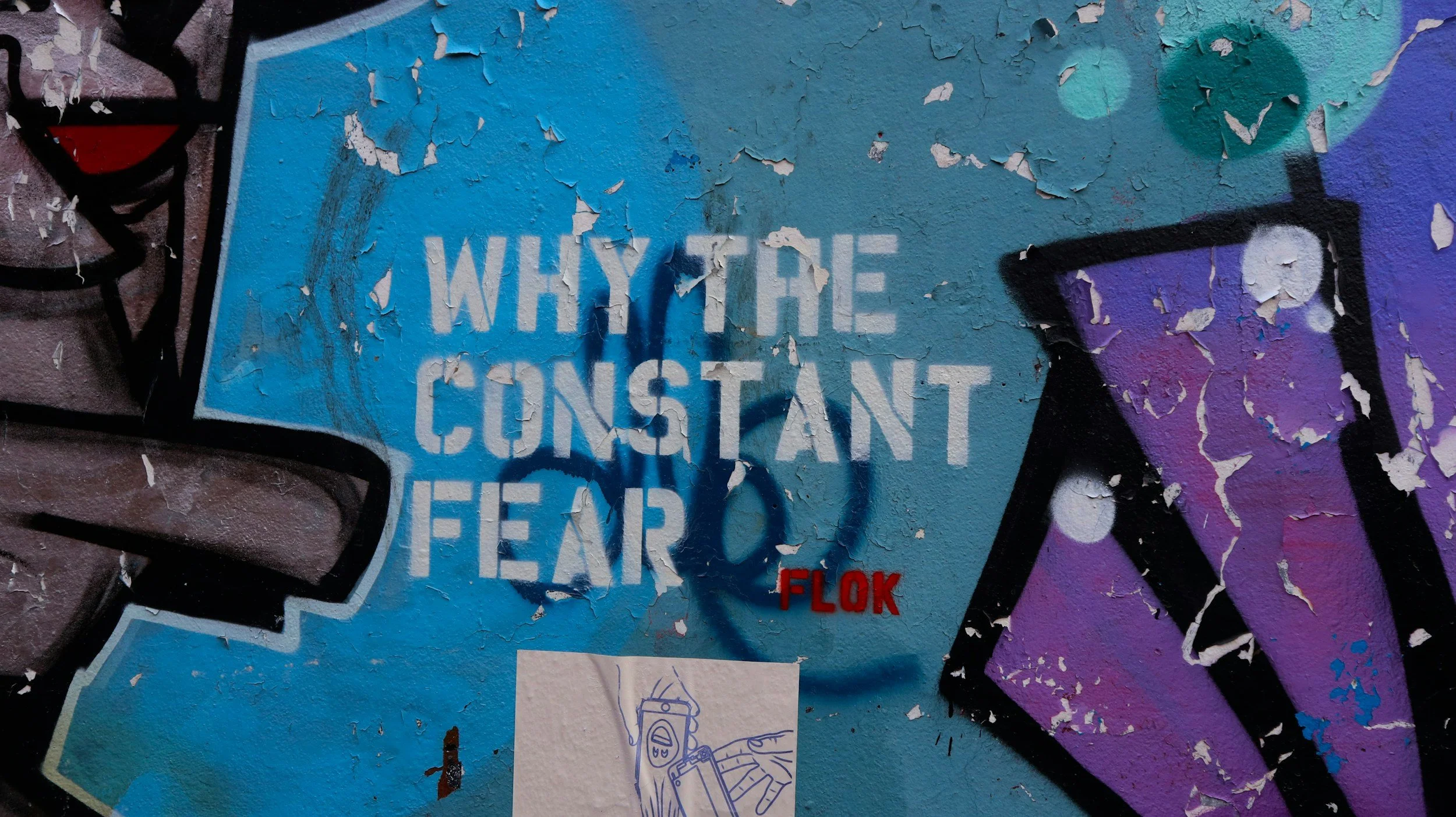
If you've ever caught yourself convinced that the lump on your arm is cancer, that your boss wants to fire you because she didn't smile at you this morning, or that the plane is definitely going down, you're not alone, and you're not irrational. You're anxious. And anxiety has a very specific relationship with worst-case thinking.
Here's what's actually happening, and more importantly, what you can do about it with the support of anxiety therapy in Asheville, NC.

Why Does Anxiety Pull Us Toward the Worst Case Scenario?
Your brain has a built-in threat detection system, and it's very good at its job. Too good, sometimes. When anxiety is running the show, that system becomes hypersensitive — scanning constantly for danger and flagging ambiguous situations as threatening. Psychologists call this catastrophizing: the tendency to jump to the worst possible outcome and treat it as though it's likely, or even inevitable.
This isn't a character flaw or a sign that something is fundamentally wrong with you. It's your nervous system doing what it was designed to do — protect you. The problem is that it can't tell the difference between a genuine threat and an awkward email from your boss. So it treats everything like a fire drill.
The good news? There are well-researched tools that can genuinely help with the support of an anxiety therapist.
How Does CBT Help You Challenge Worst-Case Thinking?
Cognitive Behavioral Therapy offers one of the most direct approaches to worst-case thinking. The core idea is that our thoughts aren't facts — they're interpretations, and interpretations can be examined.
When you notice a catastrophic thought, try asking yourself a few simple questions: What's the actual evidence for this? What's the evidence against it? If a friend told me they were thinking this, what would I say to them? What's a more realistic outcome?
This isn't about forcing yourself to think positively. It's about thinking accurately. Most worst-case scenarios, when examined honestly, turn out to be possible but not probable. That distinction matters.

What Is ACT and How Does It Help You Stop Believing Every Anxious Thought?
Acceptance and Commitment Therapy takes a different angle. Rather than challenging the content of anxious thoughts, ACT invites you to change your relationship with them.
A technique called cognitive defusion helps create distance between you and your thoughts. Instead of thinking "the plane is going to crash," you notice "I'm having the thought that the plane is going to crash." It sounds like a small shift, but it can be surprisingly powerful. You're not arguing with the thought or trying to push it away — you're simply observing it, the way you might watch a cloud pass across the sky.
The underlying message of ACT is that you don't have to believe every thought your mind generates. Thoughts are mental events, not reality. Your mind is a storytelling machine, and anxiety tends to write thrillers.
How Does Mindfulness Interrupt the Anxiety Spiral Before It Takes Over?
Catastrophic thinking is almost always future-oriented — your mind is running disaster simulations about something that hasn't happened yet. Mindfulness works by returning your attention to what's actually here, right now.
This doesn't require a meditation cushion. A simple practice: when you notice worst-case thinking, take three slow breaths and name five things you can see in the room. You're not solving the problem — you're interrupting the spiral long enough to get some ground under your feet. Over time, this kind of present-moment anchoring builds a genuine capacity to step out of anxious thought loops.

You Are Not Your Anxious Thoughts and Anxiety Therapy Can Help You Believe That
Worst-case thinking isn't a sign that bad things are coming; it's a sign that your anxiety is working overtime. CBT helps you examine the thought, ACT helps you unhook from it, and mindfulness helps you come back to the present. Used together in anxiety therapy, these tools don't eliminate anxious thinking, but they change your relationship with it. And that, over time, is what recovery actually looks like with the help of Strive On Counseling.
Ready to Stop Expecting the Worst? Anxiety Therapy in Asheville NC Can Help
Worst-case thinking can feel exhausting and completely out of your control. But it doesn't have to stay that way. Whether CBT, ACT, or mindfulness resonates with you, the anxiety therapists at Strive On Counseling are here to help you find the approach that actually works for your unique experience.
You don't have to keep white-knuckling your way through anxious thoughts. Anxiety therapy in Asheville, NC at Strive On Counseling gives you real, practical tools to change your relationship with anxiety for good. Reach out today for a free 15-minute consultation and take the first step toward a quieter mind.
Contact Strive On Counseling to set up an appointment
Meet with a caring anxiety therapist in Asheville, NC
Start changing your relationship with anxiety for good!
Other Mental Health Services Available at Strive On Counseling
Anxiety treatment isn’t the only service Strive On Counseling offers. As Asheville therapists, we understand that every individual has a unique set of mental health needs. Therefore, we offer a wide range of services and therapeutic options. More specifically, our services include individual counseling, ADHD therapy, EMDR trauma therapy, therapy for men’s issues, mindfulness, Buddhist counseling, cognitive behavioral therapy, and teletherapy / online therapy. Some other resources we offer include guided meditations, supplements, a list of books and other useful resources, and online courses. If you would like more information about any of these services, please reach out today, and start doing therapy in North Carolina!